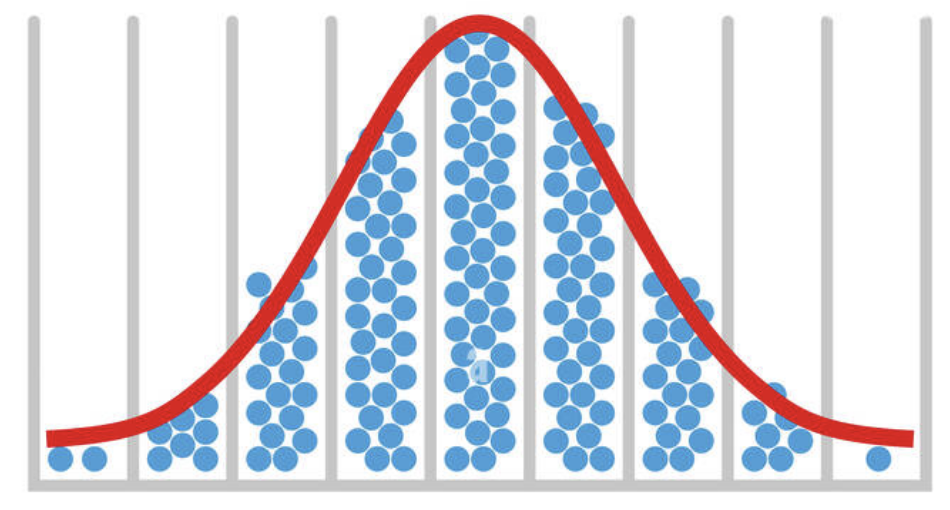
This course provides a rigorous yet accessible introduction to the fundamental concepts of probability and statistics, equipping students with the tools to analyze and interpret data and to reason about uncertainty. Topics include probability rules and counting methods, discrete and continuous random variables, expectation and variance, sampling distributions, and the Central Limit Theorem. Statistical topics cover descriptive statistics, estimation, confidence intervals, correlation, and hypothesis testing. Throughout the course, students will apply theory to real-world problems using analytical methods and computational tools. By the end of the term, students will be able to design basic experiments, interpret data responsibly, and make informed decisions based on probabilistic reasoning.